To spread the original, universal and eternal truth, path or law of yoga, which remains forever the same in essence, yet always adapts to the time and place.
|
To spread the original, universal and eternal truth, path or law of yoga, which remains forever the same in essence, yet always adapts to the time and place. |
|
|
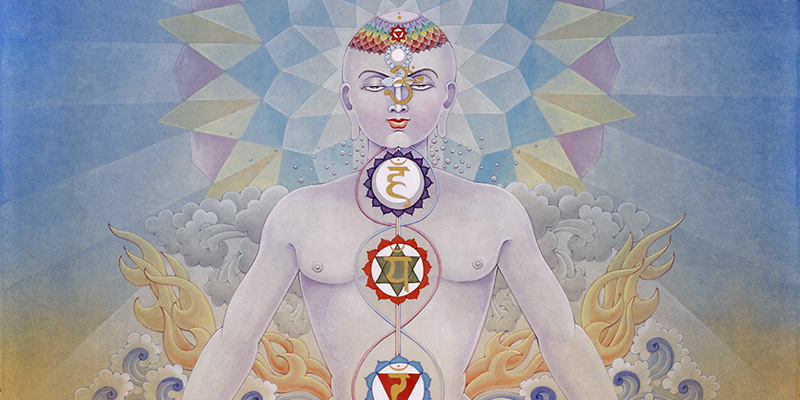
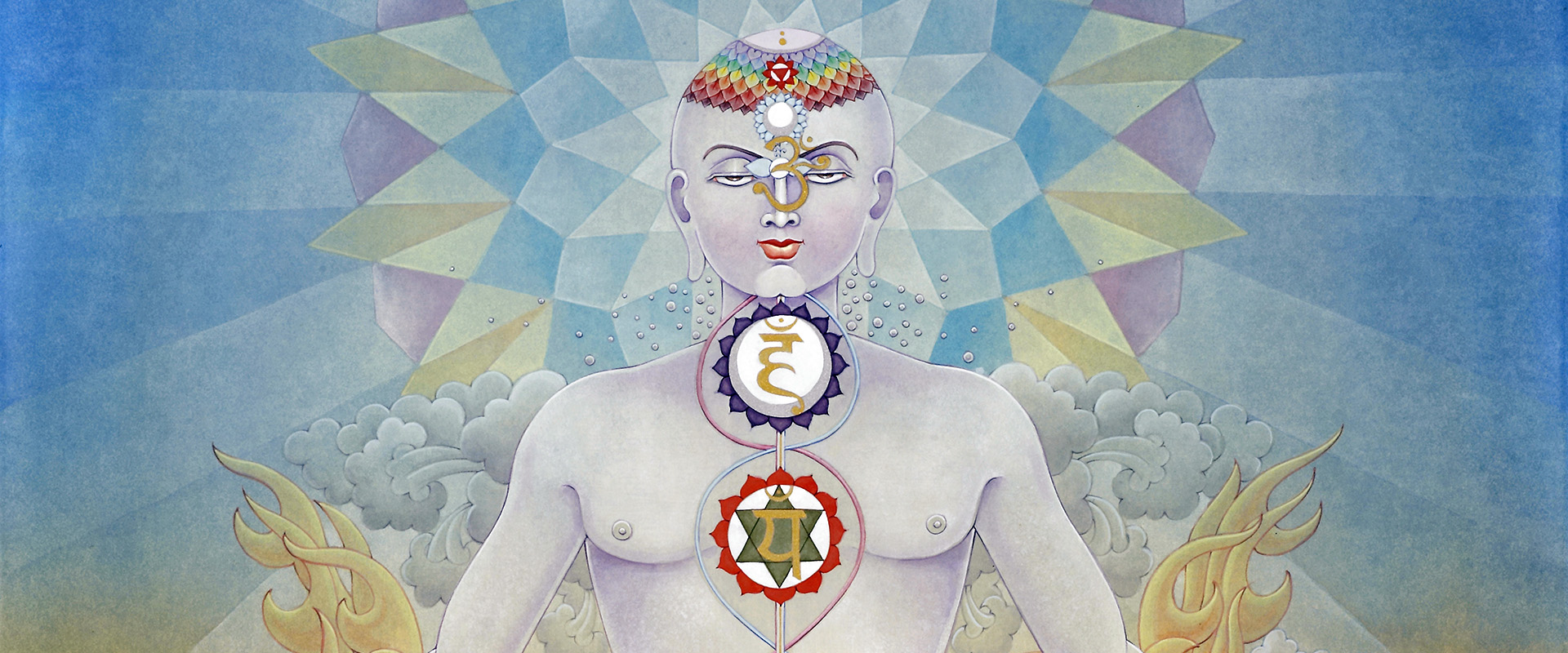
Good and bad music directly and profoundly affects the body's seven subtle psychic energy centers, called chakras, which are spinning energy wheels arranged vertically up the spine from sacrum to crown. The chakras are the playground of the elements. They are interrelated with the parasympathetic, sympathetic, and autonomous nervous systems, and thus the gross body is related to them. The particular sounds given for chakra meditation are those that energize each of the psychic centers respectively. One begins by chanting the "Petal" sounds of the chakras - those sounds that energize the ganglia of this chakra plexus. The petal sounds are followed by the bija, or essential "seed" sound of the chakra. This same sequence is then repeated for chakras two, three, four, five, and six. Chanting of the sounds of the chakras should be practiced in a comfortable posture, preferably seated on a mat or rug of organic material, with a lighted candle or oil lamp in the room. Each of the petal sounds is chanted once, pausing for a deep breath between sounds The bija "seed" sound may be chanted three or more times. If you like to know more and hear some of the chakra sounds, you can download the following mp3 files :
|
|
|
Related video : Full Class - The Seven Chakras (120')
 Sanatan Society is an international networking association of students of the late Harish Johari, joining efforts to promote his teachings of yoga philosophy, tantra, worship, art and love. Sanatan Society stands
for the original, universal and eternal truth, path or law of yoga.
Though it is Hindu in origin, Sanatan Society is not limited to any religion,
race, time or country, nor in fact to any particular organisation. More about Sanatan Society...
Sanatan Society is an international networking association of students of the late Harish Johari, joining efforts to promote his teachings of yoga philosophy, tantra, worship, art and love. Sanatan Society stands
for the original, universal and eternal truth, path or law of yoga.
Though it is Hindu in origin, Sanatan Society is not limited to any religion,
race, time or country, nor in fact to any particular organisation. More about Sanatan Society...




 The
The
 Text and mp3 audio
are extracted from the "
Text and mp3 audio
are extracted from the "