To spread the original, universal and eternal truth, path or law of yoga, which remains forever the same in essence, yet always adapts to the time and place.
|
To spread the original, universal and eternal truth, path or law of yoga, which remains forever the same in essence, yet always adapts to the time and place. |
|
|
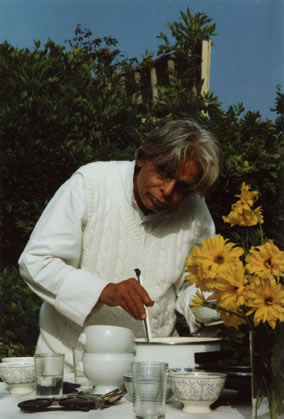
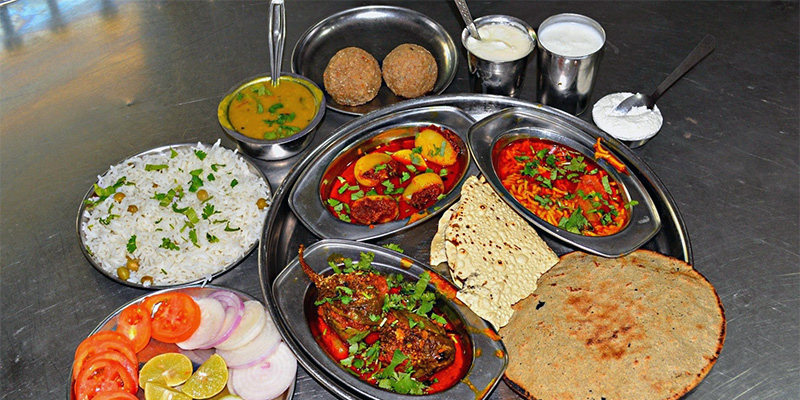
Can you tell us something about your background? I come from a very simple background, born in a village. In India, "village" means where electricity has never been seen, where the telephone is never dreamt of and where cars cannot reach. My village is Faridpur. There, every street is like a family. There are many temples and holy men. It is not an industrial town where people have no time to be friends with one another. So I come from a very different culture than that of modern America. It was my grand-uncle, Acharya Chandrashekar Shastri, who served as a role model for me. I saw in him something very different from other people. He had a great command of many subjects, he wrote more than 100 books, and had a keen interest is spiritual things. We are going to be talking about cooking. My experience is that many men from India know something about cooking, whereas in the West, at least until more recently, it was uncommon to find a man who had an extensive interest in cooking. I think it is uncommon to find a man adept at cooking anywhere in the world except for the chefs in big restaurants. But I think that in India the men are perhaps very keen observers. They watch their mothers very closely as boys. Otherwise, in India we are not allowed to go into the kitchen. When these boys become men and then go abroad, they have to cook. Otherwise they cannot find the food of the kind and taste that they are accustomed to. I have been traveling for some years and now my wife, who has been living in California for the last couple of years, sees that I can cook, so she allows me in the kitchen. You have described eating and cooking as forms of worship. Can you explain that? Eating is always worship in the sense that the body is our instrument of work and we must take care of it in terms of diet. We should not eat simply for filling the belly. Food should have some taste and give rise to love and life. The body is a temple: the individual consciousness that dwells within the body is part of the supreme consciousness. Every effort to make our body pure and help its proper growth and development is a form of "worship." So it is with eating as well as cooking. Food that is cooked by someone who does not want to cook, who is not in the proper consciousness, will not be healthy food despite the ingredients. You may not get sick from it, but it is not health producing. We do not eat only the food that is cooked, but the consciousness of the cook as well. Cooking should be done as an offering to God. Before eating one should first offer a portion on a separate plate to God in meditation. It should be done slowly and deliberately since meditation cannot be done in a hurry. In India, one who has not taken bath and put on clean cloth will not be allowed in the kitchen. One must be clean, and the kitchen also must be clean before starting. One cooking should be in a happy mood, as should be the one who serves the food. Food cooked by one who really likes to cook tastes quite different from that food which is cooked merely out of obligation. Bathing before cooking has a twofold effect: preparing to bathe makes the cook more conscious of his or her work; in this way it prepares one's mind. It also cleans, purifies, relaxes, and removes fatigue and depression. The art of cooking involves an emotional relationship between the food and the cook. Cleaning, cutting, chopping food - all these activities can be performed with a sense of rhythm and in a relaxed manner. Cooking should be enjoyed as much as any other art. It becomes a creative art when the person cooking does so with complete emotional involvement. In this way, like a clairvoyant, he or she will receive messages through intuition, creating new tastes and evolving new recipes. Once the cooking starts, one cannot taste the food, nor should one try to enjoy the food being prepared even by smelling it. If it is enjoyed first by ourselves, it is no longer fit to offer to God. In the West I doubt if many people could relate to not tasting the food while it's still on the stove. Typically one might think, "How will I know if it is done or properly cooked without tasting it first?" I cook every day and never taste it before it is finished and offered and everyone tells me it tastes very good. One should have confidence in what he or she is doing to begin with. Those who cannot see, hear better; and those who cannot hear, see better. At the loss of one faculty, nature gives more power to other faculties. If we refrain from tasting the food beforehand, then our ability to subtly experience what it will taste like will increase. One must learn to cook by feeling, not by tasting. Cooking improves one's sense of smell, sight and touch respectively. The sense of taste is deliberately not used. The energy that would have been centered there may then flow into other sense organs, thus making them more receptive. By willfully abstaining from tasting, a cook improves his or her other senses such that they become more sensitive and efficient. I know a blind man who used to cook bread simply by listening to the sounds it made during the process of cooking. Indian philosophy divides nature into three modal influences - goodness, passion, and ignorance. The sattvic influence of goodness and clarity is one from which our spirituality is developed. Should those interested in spiritual life then eat only sattvic foods? Rajasic or passion foods create sensuality, sexuality, greed, avarice, fantasies, irreligiosity, and egotism. They must be prepared and combined with other foods before they are eatable. Tamasic foods, or those of ignorance, are foods that consume considerable energy while being digested. They make one dull and drowsy. They increase pessimism, lack of common sense, laziness and doubt. Sattvic foods give necessary energy to the body without taxing it and they are helpful in achieving balanced bodily chemistry, which serves as a foundation for higher states of consciousness. The psyche is brought to a centered state through sattvic foods because they bring readily digestible and nourishing food material into the system. These three modes are distinct, yet foods can be converted from one to another with time and food combination. In one sense, those concerned with spiritual development should eat only sattvic foods, but not everyone is a rishi. Many may be interested in spiritual life, yet still have worldly commitments. These three influences - sattva, rajas, and tamas - pervade human society and generally speaking we people of the world, common people, should eat in a balanced way, while trying as far as possible to avoid tamasic substances such as meats and liquors. If one is a rishi, then he can eat only sattvic foods. But Krishna was not a rishi and in the temples we offer all types of vegetarian foods to him. If we follow the lead of Krishna, who set an example for all types of work, we will have a proper diet that includes our spirituality. Milk is central to the yogic Indian diet, yet milk has been assailed in modern America due to its association with the unjust treatment of the cow. Its nutritional value is also questioned. You call milk the miracle food, even recommending occasional milk fasts (consuming only milk for up to 40 days at a time) for purifying the body and mind. What is your response to those who denounce milk? First of all we are mammals. Our mothers have milk to give us and our life thus depends upon milk from the start. If modern society has polluted the cow's milk and caused harm to the giver of the milk, then so much for city living and "civilized life". This represents only 20% of the population. The other 80% living in the Third World are drinking milk without any difficulty. Because someone has corrupted natural living, that does not mean we should throw out milk. Milk has everything we require for healthy living. According to the Vedic culture, the rishis who gave up everything, all work, were living on milk alone as their perfect food. Milk is a food that is readily converted into semen, which produces new blood. Thus if milk is the sole nourishment of the human organism for some time, it can rejuvenate that organism. "Milk kalpa" or a milk fast is a treatment employed by homeopathic doctors for patients who have lost hope of living a healthy, happy life. Such a milk fast can also cure premature aging. During the fast the body reorganizes itself. Premature aging is often the result of food material clinging to the intestinal walls. When the process of assimilation malfunctions, various organs in the system are unable to receive the proper supply of nutrients and thus begin to age quickly. If these waste materials can be expelled, all the organs will receive proper nutrition. Milk is known to clean the digestive tract. It expels toxins and waste from the stomach and intestines and supplies nutritious food material readily digestible and convertible into blood. Being alkaline in nature, milk is an aid to the stomach in its digestive function.` The main organs of digestion are the mouth, stomach, and small intestine. Milk helps the entire digestive process and if digestion is working properly, the circulatory system works well. If the circulatory system is functioning properly, then the nervous system will be healthy. These three systems regulate the human body, and milk helps to regulate them. Milk is best straight from the cow while it is still warm. Milk from a cow 21 days after she has delivered a calf is especially powerful. It must be remembered that in India cows are especially well taken care of, even revered. They are brushed and washed regularly and they are not milked when they are pregnant. In Vedic times, care of the cow was considered sattvic. There was no need to pasteurize or tone milk. With the appearance of anthrax, people in Europe became alarmed and pasteurization began and saved many lives. Pasteurization was an alternative to disease. But no one ever thought to revert to cleaning and properly caring for the cow. Thus today we have ultra-pasteurization and poorly cared-for cows who, instead of being gently hand-milked by someone who cares about them, are milked electronically without sensitivity. In ayurveda cows are classified according to color and place of residence. Milk from a black cow is highly praised and recommended. Such milk is like nectar and it relieves gases, mucus, bile, burning sensations, depression, heart disease, stomach troubles, kidney disorders, jaundice and more. Milk from a spotted cow, brown cow or red cow cures problems of excess bile. But milk from a cow whose calf has died creates mucus, bile and gas. Milk from a cow who has stopped feeding her calf is strengthening but harder to digest. So in this way, before modern society condemns milk, they might do well to consult those who have the experience of loving and knowing cows as we do in India. There is more to be discussed than the fact that cows are mistreated. One must learn how to treat the cow properly and that includes taking her milk, which is her gift to humanity in return for her being nicely taken care of. You have described certain foods as "holy." What makes them holy? Foods which have great value to human society, such as figs, bananas, dates and others were considered holy by the sages because they do not need to be cooked, they are very high in nutritional value and they can be picked, washed and offered to God very easily. By this I refer to sattvic foods. They need no preparation, but are already prepared for eating by God. Otherwise all prepared or cooked foods offered to God are also holy. You recommend cooked food over raw food. Why? Whatever you eat raw is then "cooked" within the body. Most people do not have the necessary digestive power to eat many raw foods. Humanity has mastered the element of fire, which reduces the expenditure of energy required by the intestines. Body heat and stomach acids provide the catalysts for digestive action. The human body is not geared for eating only raw fruits, vegetables, grains and legumes. Foods such as these are more difficult to digest. They require more energy to digest. The obvious path of least resistance is cooked vegetarian food, with raw foods like fruits, salads, nuts and sprouted beans and seeds eaten within an hour and a half after preparation. Cooking is also necessary to kill certain bacteria. If you do eat raw foods such as salads, oil or lemon is necessary for the same purpose. Only a few things can be eaten raw; most foods must be cooked. Civilized humanity knows how to cook food and use spices. What are the six tastes in Indian cooking? There are six tastes and six taste buds with which to appreciate them: sweet, sour, salty, bitter, pungent and astringent. All foods produce one of the six tastes. Each taste is a combination of two of the five basic material elements : earth, water, fire, air and ether (space). Sweet taste results from the combination of earth and water. This is a sattvic taste that produces calories for energy, removes nervousness created by glucose deficiency, removes acidity and provides radiance and a healthy glow to the skin. Sour taste is a mixture of water and fire. This taste is rajasic and therefore it excites the mind. Sour taste increases appetite, provides saliva, and helps digestion. Salty taste is produced from the merging of earth and fire. This taste is also rajasic and therefore it also excites hunger, attracts water and liquefies mucus. Bitter taste results from a combination of air and space. It is rajasic and serves as an appetizer and blood purifier and rids the body of toxins. Pungent taste is a combination of air and fire. It is both rajasic and tamasic simultaneously. Pungent taste excites the sense organs, for example making the eyes water and the nose run. This taste increases circulation and produces perspiration. Astringent taste is a mixture of air and earth. Rajasic in nature, it purifies the blood, helps the skin, creates dryness, assimilates fats and oils, and aids digestion. An intelligent, creative cook will provide all
six tastes in his or her preparations rather than sticking
to only one or two tastes. We are meant to experience all
six different tastes. Unless we use all the tastes, some taste
buds will remain unsatisfied and the system will experience
a certain imbalance and chemical deficiency. Balanced meals
should include all six tastes. One's general diet can be one of healing, but for that one needs good digestion. If one has good digestion, food can be seen as medicine when properly administered in relation to specific diseases. How would you classify the typical Western diet? For those who are health conscious, I think they should avoid it. I would not say that those who are eating that fast-food diet are bad people, but I don't think they have any great understanding about food nor about life's actual purpose for that matter. They are rather unfortunate, because in a sense anyone on that diet lives only to die. The American diet is spreading around the world, but in Delhi in India, McDonald's went out of business and Coca Cola is having great difficulty. In what direction do you see the Western diet moving in the future? Food is a necessity, not a luxury. Food should not be treated as carelessly as it is nowadays. It is common in this country to see someone walking down the street eating "fast food" on the run. Large-scale manufacturers of food do not concern themselves with the question of consciousness and vibration in regard to preparation. There are many people who have no time to think about food. They simply eat when they are hungry, and are not particularly interested in what, how, or where they eat. Others are led only by taste. Only a few realize the importance of understanding the relationship between our food and our living habits. Unfortunately, whatever is easier will become more popular, because at least in the West, man has no time. How is it that food affects our consciousness? Food is the first essential part of our life, anamoya kosha, understanding our dependence upon food. The first stage of realization of the nature of reality involves understanding our relationship with food. Without food, prana (breath) will not work, nor mana (mind) nor jnana (intelligence). Psychic make-up depends upon body chemistry and body chemistry is directly influenced by food input. Food is not just fuel for our bodies - it is as much alive as we are. Food is also a medium through which one person's feelings can be transferred to another. In our country we say that food prepared by one's mother can satisfy the child more than the same food prepared by another. Certain foods will create a particular consciousness and another's consciousness can be transferred through prepared food. The body has both the physiological side and emotional side, and food affects both. If you eat saffron for a few days you will feel happy. Whenever I have groups of 20 or 30 people in a workshop, I use fenugreek because it is a regenerator. It also gives inspiration and joy. I can prepare food of such type that upon taking it a man will run like a horse for sex. Or I can cook food such that upon eating it one will feel calm and become quiet. This is all a question of knowing the art of spicing. Some spices are hot, some have a cooling effect upon the body. One must know how to mix them properly to cause different effects. Spices are very important. After all, if it weren't for spices, America might never have been discovered. |
|
This was "The Spirit of Cooking" Interview with Harish Johari by Thomas Beaudry for "Clarion Call", Volume 3 - Number 4, 1990. |
 Sanatan Society is an international networking association of students of the late Harish Johari, joining efforts to promote his teachings of yoga philosophy, tantra, worship, art and love. Sanatan Society stands
for the original, universal and eternal truth, path or law of yoga.
Though it is Hindu in origin, Sanatan Society is not limited to any religion,
race, time or country, nor in fact to any particular organisation. More about Sanatan Society...
Sanatan Society is an international networking association of students of the late Harish Johari, joining efforts to promote his teachings of yoga philosophy, tantra, worship, art and love. Sanatan Society stands
for the original, universal and eternal truth, path or law of yoga.
Though it is Hindu in origin, Sanatan Society is not limited to any religion,
race, time or country, nor in fact to any particular organisation. More about Sanatan Society...