To spread the original, universal and eternal truth, path or law of yoga, which remains forever the same in essence, yet always adapts to the time and place.
|
To spread the original, universal and eternal truth, path or law of yoga, which remains forever the same in essence, yet always adapts to the time and place. |
|
|
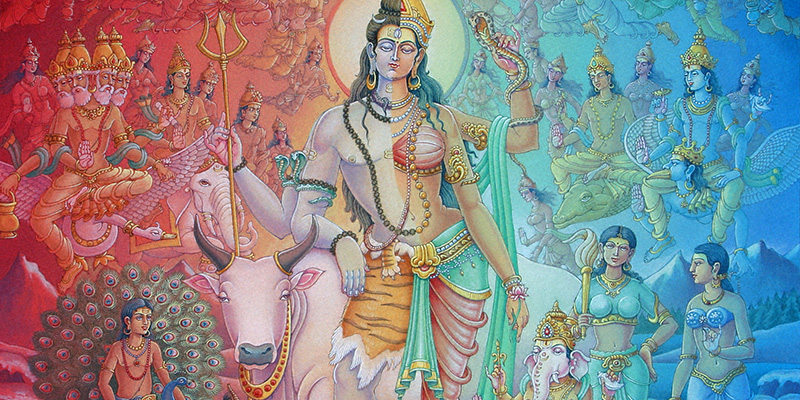
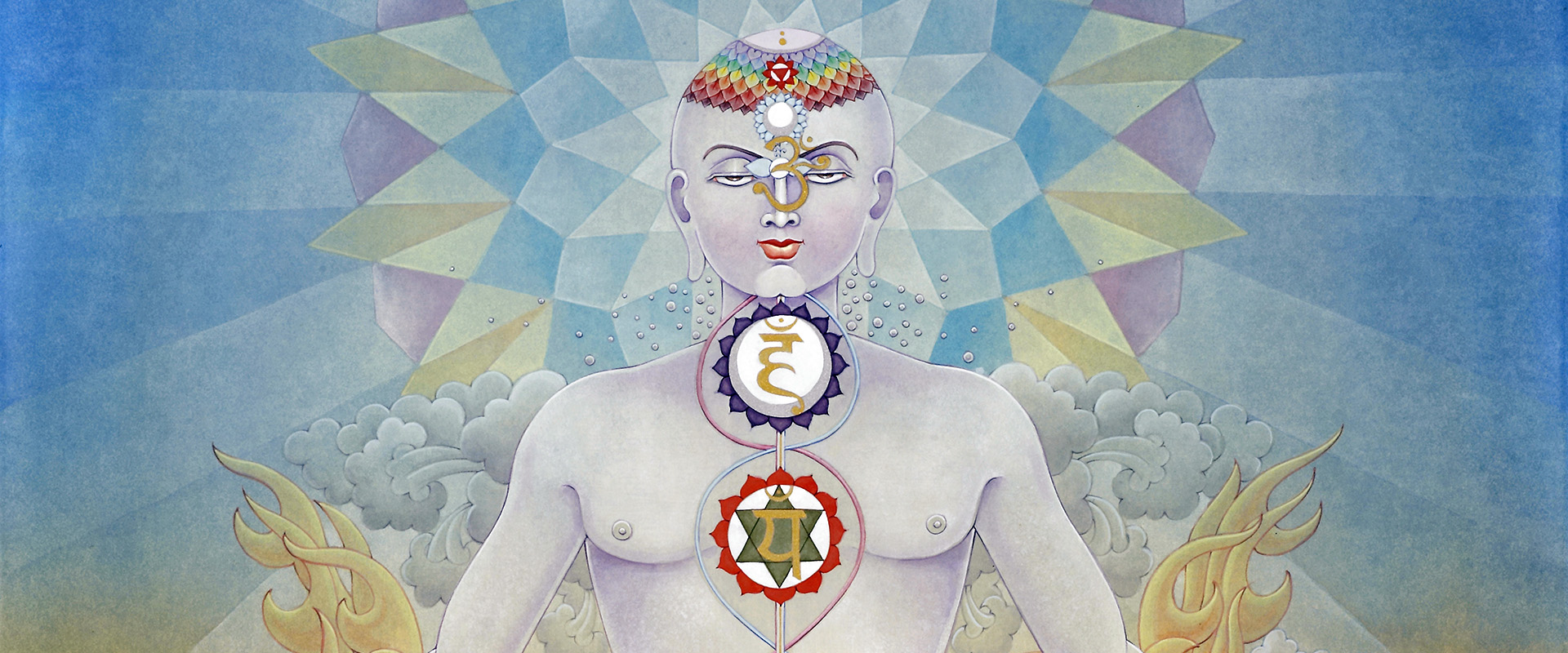
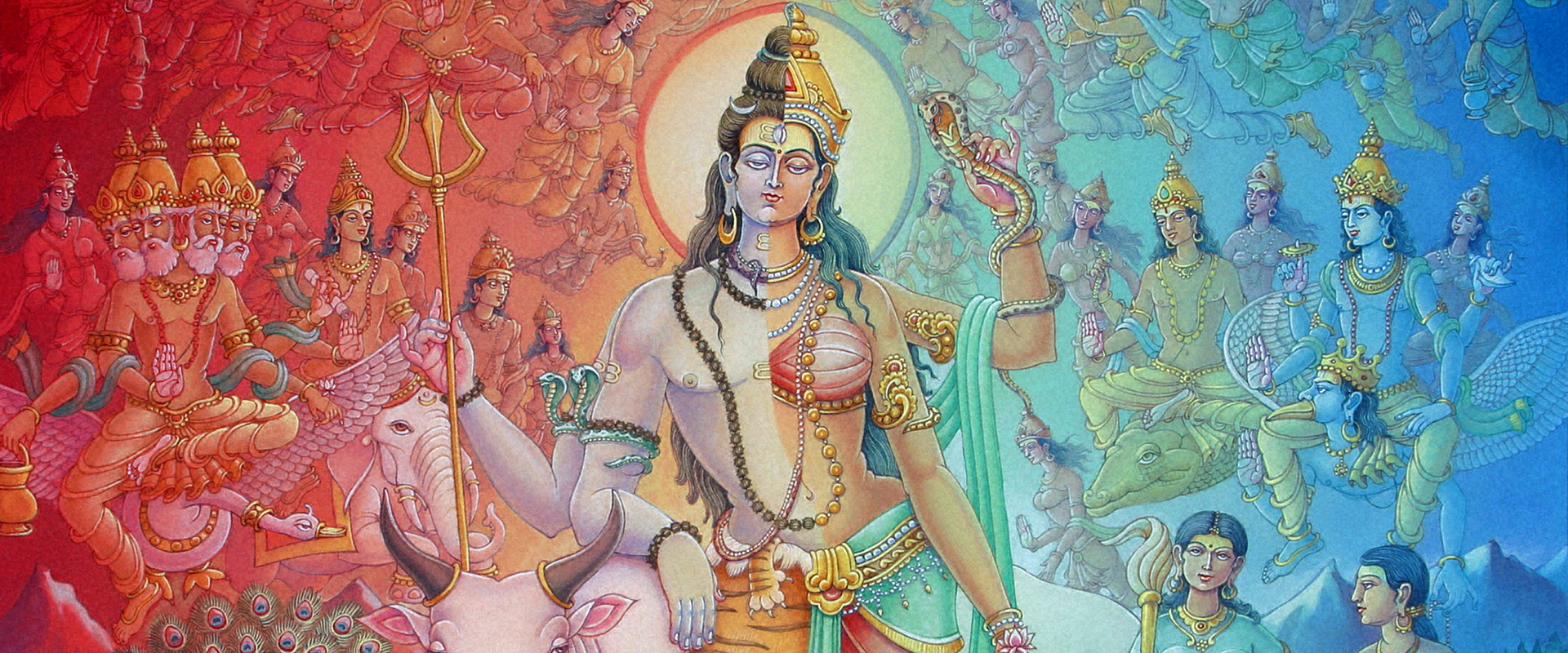
Introduction According to yoga, individual consciousness is a partial expression of cosmic consciousness. Essentially, cosmic consciousness and individual consciousness are one. Only subjectivity separates them. Consciousness is the ultimate reality out of which mind and matter proceed. In the broad spectrum from minerals to man there are various levels in which consciousness exists. Of all existing bodies that express themselves through behaviour, the human body is the most highly evolved. It is capable of self-expression and the realization of Truth beyond the realm of sensory perception. With the help of memory, imagination and intuition, the human organism can understand laws inherent in nature and use them for its growth and development. When consciousness desires expression as an organism, it needs tools to control and work with the physical body. This is illustrated by the idea of Shiva and Shakti as a playing couple. Shiva represents the devine lover and Shakti represents the energy and the beloved. She wants to play a game. She creates a world of her own and invites him inside. "Hey, I have created a world, will you come?" He says, "Sure, but I cannot live in it, because it's ever changing, and I am never changing, so what should I do?" She replies, "If you get into everything as the center of everything, then the center never changes, everything around changes. You are always surrounded by eternal bliss, you remain in your bliss. And around you I will put a network of my powers which will intermediate between you and the outside world. That way you will not have to do anything. You can remain never changing and I can remain ever changing and we can have fun". Shiva agrees, and the game starts. Self seated in Sheath of Bliss (Anandamayi Kosha) It is described that human consciousness is folded into five layers, or sheaths, (koshas) around the central point, containing the self (chitta). The self is enveloped in the sheath of bliss. Both the self and the bliss are not experienced although they are always there, and always protected from all sides. Nothing is disturbing the self, because nothing is real for the self. The self is the truth, and truth is never changing. Whatever else is happening, is all changing every minute. The self knows this is not real, this is ever changing, this is illusion. Ramana Maharishi compared the self with a screen. When the film is going on, the screen is coloured with blood and all kinds of things are happening. But when the film is over, the screen is as white, and clean as it was before. That screen is the self, chitta. It remains completely untouched by whatever happens. Sheath of Ego and Intellect (Vigyanamayi Kosha) Within the 5 koshas division of our psychology, around the sheath of Bliss is sheath of Knowledge, that combines ego and intellect. Ego is the tool of consciousness which links all events in life together. Ego is the illusion that I exist as a separate individual being, it is false identification. Ego is the one which assumes the responsibility for the body. Ego says, "This body is mine". When the body breathes, he says, "I am breathing". And if you close his nose then he says, "You are suffocating me, I am dying". Ego is very sensitive and the fear of death is always there. Ego takes a name, and becomes Mr. such and such and it interacts with others. Whatever you experience in this life or in past lives, and whatever information you got from your parents, from your society, from the race, from the country to which you belong, all that information combined together becomes intellect. It gets a part of the genetic information from seven generations of the father, and seven generations of the mother. Intellect carries with it the past and the present, and also speculates about the future. Intellect helps ego with advice and comments but the final decision comes from ego. Ego can say, "I like it" and although intellect may disapprove ego may decide "O.k., I don't believe that this is right, but I don´t want to follow all these rules and regulations, I'll break the law". Strong attachments and the struggle for survival increase the ego. In modern schools there is competition all the time. Who does it first? Who is the best? Ego always tries to say, "I am better than you", "I am holier than you". In ancient days they had an education system that did not let the ego grow beyond a particular limit. The child had to go and live with the family of a teacher as a member of the family (gurukul). The wife of the teacher was responsible for providing all food, and nobody was allowed to bring other food. And parents were not allowed to bring gifts in order to treat all pupils equal, and make them feel that everyone is equal. Sheath of Mind (Manomayi Kosha) Mind is the tool of consciousness that enables us to perceive the world and process the incoming information. The world exists in front of us, because of our five senses. There are organisms without brain and eyes and ears, only tactile sensation is there through the skin. If you touch them, they react. Even though they have no brain these organisms have perception of the world because they have mind. Most of the time, people think that mind is the functional aspect of brain, however, mind and brain are two different things. Mind is using brain as tool. Mind is pervaded in everything, it's in every cell, everywhere, it has no specific seat. It's not the same as god, but it has similar character being present everywhere. Mind is the greatest obstacle in the way of systematic thinking. It jumps from one point to other point by finding similarity in that point. Anything which is similar immediately reminds the mind of something else, and from this field he jumps into some other field, and then he starts talking about something else and the whole point is being lost. Most of the time only one is dominant and that is mind. But sometimes ego is also very dominant. And intellect is only in the beginning, when you start, at that time it comes and tries to show you how to go, but after that, mostly it is the mind which takes the lead. Ego, mind, intellect, and the self (together 3 of 5 koshas), travel from one body to other body, from one life to other life, as long as there are attachments, likes and dislikes, ego continues for the fulfillment of desires. Sheath of Vital Air (Pranamayi Kosha) Prana or energy is the moving force and the fourth of the 5 koshas. The sheath of Vital Air supplies energy to the whole system and keeps it alive. Prana refers not only to the flow of oxygen but to all components of life force. This energy enters each and every cell and each and every pore. Breath is the physical counterpart of the mind. All neuromotor activities, all sensory and motor functions of the body, are performed with the help of the breath. Breath provides the pranic force to the organism. This pranic force, working as the Air element, creates movement, pulsation, vibration and life. The science of controlling prana is known as pranayama, a branch of Hatha Yoga. By mastering prana one can master the mind. By practicing pranayama, the breath becomes calm, images do not disturb the mind, and the internal dialogue stops Sheath of Matter (Annamayi Kosha) The main centers of consciousness in the human body or last of the 5 koshas are found in the brain and the spine. The cerebrospinal system is the first part of the organism to be developed after conception. From it the entire bodily form comes out. This system is a great generator of electrical energy that is constantly supplied to the internal organs by a network of nerves that serve as connectors. The functiong of the entire human body is controlled by the cerebrospinal system, and the psychic centers are located in it. Inside the big company of the body there is a branch, a side office, in which mind is the boss. Mind has a practical tool in the body which is the brain. Brain uses breath, and breath uses nerves, and nerves are dealing with the five sense organs (eyes, ears, nose, tongue, and skin), and the five work organs (anus, genitals, legs, hands, and vocal chords). So the combination of brain, breath, nerves, sense organs, and work organs form a unit inside the body which is working with the mind. |
|
|
Related video : Full Class - The Layers of Consciousness (Koshas) (120')
 Sanatan Society is an international networking association of students of the late Harish Johari, joining efforts to promote his teachings of yoga philosophy, tantra, worship, art and love. Sanatan Society stands
for the original, universal and eternal truth, path or law of yoga.
Though it is Hindu in origin, Sanatan Society is not limited to any religion,
race, time or country, nor in fact to any particular organisation. More about Sanatan Society...
Sanatan Society is an international networking association of students of the late Harish Johari, joining efforts to promote his teachings of yoga philosophy, tantra, worship, art and love. Sanatan Society stands
for the original, universal and eternal truth, path or law of yoga.
Though it is Hindu in origin, Sanatan Society is not limited to any religion,
race, time or country, nor in fact to any particular organisation. More about Sanatan Society...


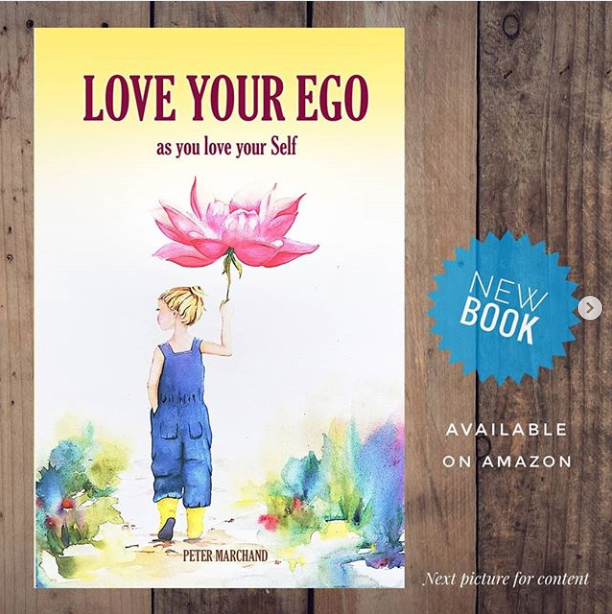
 Abstract on the
5 Koshas by
Abstract on the
5 Koshas by