To spread the original, universal and eternal truth, path or law of yoga, which remains forever the same in essence, yet always adapts to the time and place.
|
To spread the original, universal and eternal truth, path or law of yoga, which remains forever the same in essence, yet always adapts to the time and place. |
|
|
Kriya Yoga is a technique, taught directly by the master to the disciple through a purification process. There is no written record of when this ancient tradition of Kriya Yoga began. The rishis of the Upanishads, Shri Krishna in the Bhagavad Gita, Maharishi Patanjali in his Yoga Sutras and many other masters of yoga, practiced and taught the scientific method of Kriya Yoga through the ages. In the modern times, toward the middle of the ninteenth century, Mahavatar Babaji brought the technique of Kriya Yoga to the general public through his discipline Shri Shyamacharan Lahiri, a pious householder (Lahiri Mahasaya). Kriya Yoga is also called Chauturanga Yoga, which has four parts: Pratyahara, Dharana, Dhyana and Samadhi. Kriya Yoga is an integral Yoga, a union of Karma Yoga, Jnana Yoga and Bhakti Yoga. Kriya Yoga is a scientific technique of meditation, which brings all-round development to a person. |
|
|
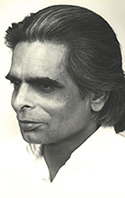 Sanatan Society is an international networking association of students of the late Harish Johari, joining efforts to promote his teachings of yoga philosophy, tantra, worship, art and love. Sanatan Society stands
for the original, universal and eternal truth, path or law of yoga.
Though it is Hindu in origin, Sanatan Society is not limited to any religion,
race, time or country, nor in fact to any particular organisation. More about Sanatan Society...
Sanatan Society is an international networking association of students of the late Harish Johari, joining efforts to promote his teachings of yoga philosophy, tantra, worship, art and love. Sanatan Society stands
for the original, universal and eternal truth, path or law of yoga.
Though it is Hindu in origin, Sanatan Society is not limited to any religion,
race, time or country, nor in fact to any particular organisation. More about Sanatan Society...






 This introduction
on Kriya Yoga was provided by
This introduction
on Kriya Yoga was provided by